
What the Rockingham County Register of Deeds Does
The Register of Deeds is the keeper of the county's real-estate record. When property changes hands or a loan is secured against land, the document is recorded here. The registry indexes each recorded instrument so it can be found later by name or property. Title searchers, lenders, attorneys, and owners all rely on this index to confirm who owns what and what claims exist against a parcel.
The county department contact table lists Registry of Deeds Property Information at 102 North Road, Brentwood, NH 03833, phone 603-642-5526. Older county annual-report material names Cathy Ann Stacey as Register of Deeds, with mail to P.O. Box 896, Kingston, NH 03848, and a fax of 603-642-5930. Confirm the current officeholder and address with the county before relying on older listings.
The Register of Deeds is a county office, separate from the state Judicial Branch that runs the courts. It is funded through the county budget, and the county holds budget meetings for the registry like its other departments. Because the office records and indexes documents for the whole county, it serves all 36 towns and 1 city in Rockingham, from the seacoast communities to the western towns near Derry and Salem. That broad reach makes the registry one of the busiest record offices in the county.
Land Records Held by the Registry
The registry records many types of real-estate instruments. Each one affects title in a different way. A deed transfers ownership. A mortgage secures a loan against the property. A lien records a claim, like a tax or mechanic's lien. A plan maps a subdivision or survey. The registry is the public home for all of these.
- Deeds. Warranty, quitclaim, and other transfers of ownership.
- Mortgages and discharges. Loans secured by property and their release when paid.
- Liens. Tax liens, mechanic's liens, and other recorded claims.
- Plans and surveys. Subdivision plans and recorded surveys.
- Other instruments. Easements, powers of attorney affecting land, and similar recordings.
These are land records, not court records. A foreclosure or partition that goes to court produces a court file, but the recorded deed or mortgage behind it lives at the registry.
How to Search Rockingham County Land Records
Land-record searches usually run by owner name or by property. The registry indexes grantor and grantee names, which lets a searcher trace a chain of title. For a full title search, most people use a title company or a real-estate attorney, but a basic name or property lookup is open to the public at the registry.
- Contact the Registry of Deeds at 603-642-5526 to confirm search options and hours.
- Search by grantor or grantee name to find recorded deeds and mortgages.
- Use the property description or book and page number for a specific instrument.
- Request certified copies of recorded documents if you need them for legal use.
- Ask about the property fraud alert program to monitor recordings against your name.
The county department index lists the Register of Deeds among the offices on the Brentwood campus. The official department page is shown here:
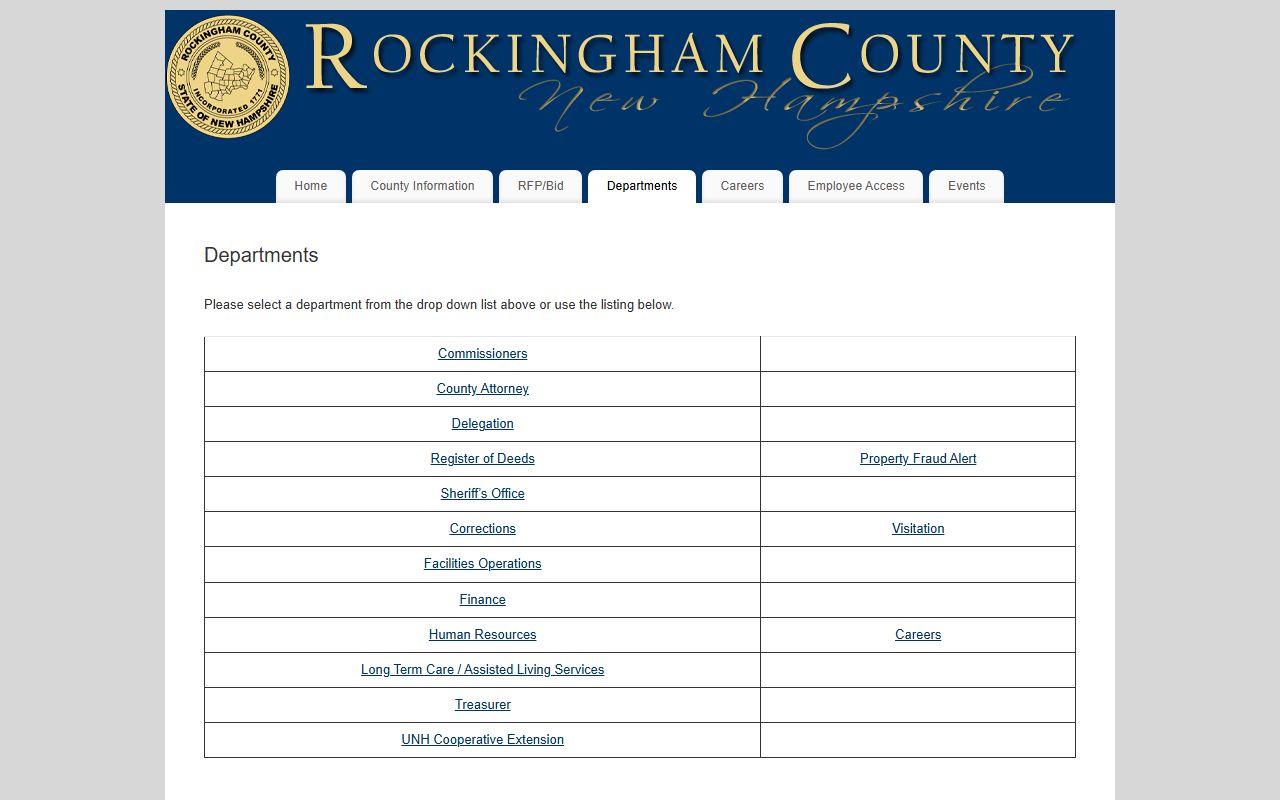
Use the department index to confirm the registry's current contact details and any online search tools the county offers.
Common Rockingham County Land Record Terms
Land records use their own vocabulary. A short glossary makes the index and the documents easier to read. These terms show up in deeds, mortgages, and the registry index.
- Grantor
- The party transferring an interest in property, such as the seller on a deed.
- Grantee
- The party receiving the interest, such as the buyer.
- Book and Page
- The location of a recorded document in the registry's records.
- Encumbrance
- A claim or liability attached to property, such as a mortgage or lien.
- Discharge
- A recorded release of a mortgage or lien once it is paid.
- Chain of Title
- The history of ownership transfers for a parcel over time.
Why Rockingham County Land Records Matter
Land records do more than prove ownership. They protect buyers, lenders, and heirs. A clean chain of title lets a sale close and a loan fund. A recorded lien warns a buyer about a debt tied to the property. A recorded discharge proves a paid-off mortgage. Without a reliable public record, real-estate deals would be slow and risky.
Rockingham County's deep history adds weight to its land records. The county was organized in 1769 and incorporated in 1771, and it holds some of New Hampshire's earliest settled land. Older deeds and plans can carry real genealogical and historical value. For a property with a long history, the chain of title can stretch back generations in the registry's books.
Because the registry record is public, anyone can confirm ownership or check for liens before a purchase. That openness is the point. It lets the market trust the record rather than the word of a seller. The registry's job is to keep that record accurate, indexed, and available.
Property Fraud Alerts
Property fraud happens when someone records a fake deed or lien against a property to claim or cloud ownership. Many registries offer a free alert that emails an owner when a document is recorded against their name. This is a simple way to catch a fraudulent recording early. Ask the Rockingham County Register of Deeds whether an alert program is available and how to enroll your name.
Note: A fraud alert does not block a recording; it warns you so you can act quickly if a suspicious document is filed.
Recording and Copy Fees
Recording fees and copy fees at the registry are separate from court fees and vital-record fees. Land-record recording fees, the state real estate transfer tax, and certified-copy charges follow their own schedule. Confirm the current amounts with the registry before recording or ordering copies, since these fees change.
| Service | Fee Source |
|---|---|
| Document recording | Registry recording fee schedule; confirm with the office |
| Real estate transfer tax | State transfer tax on conveyances |
| Certified copy of a recorded document | Registry copy fee schedule |
| Plan recording | Separate plan recording fee |
Because the registry handles money for recordings and transfer tax, it keeps its own payment rules. Ask which payment forms the office accepts before you visit to record a document.
Register of Deeds vs Clerk of Court
The registry and the court clerk are different offices with different records. The Register of Deeds keeps land records. The Clerk of Court keeps court case files. A deed, mortgage, or lien is a registry record. A judgment, decree, or probate appointment is a court record. Sending a request to the wrong office is a common cause of delay on the clustered Brentwood campus.
For court case files and certified court copies, see the Clerk of Court page. For estate matters that may affect real property, see probate records. The registry is the land-record office; the clerk is the court-record office.
Register of Deeds Contact Information
Use the address card below to reach the registry. The Register of Deeds and County Attorney area is described on official directions material, and the contact table lists the property-information line. Confirm the building before a visit, since county offices are split between Route 125 and North Road.
Rockingham County Register of Deeds
102 North Road
Brentwood, NH 03833
Mail: P.O. Box 896, Kingston, NH 03848
603-642-5526
Fax: 603-642-5930
County General Information
Rockingham County
Brentwood, NH 03833
603-679-5335